
How to Collect a Urine Culture Sample Correctly
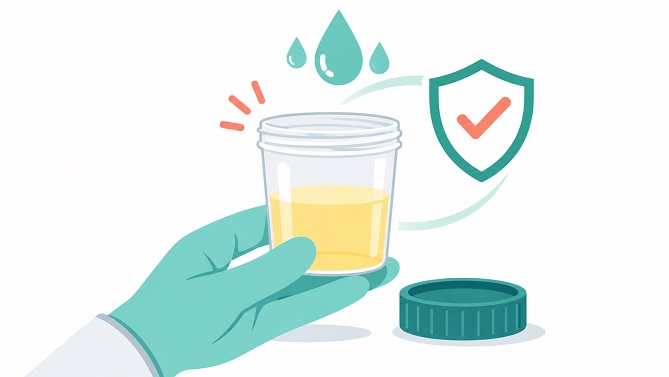
How to Collect a Urine Sample for Culture Correctly
A urine culture is performed to check for bacterial growth in urine and, when growth is detected, to help identify the causative microorganism. When necessary, antibiotic susceptibility testing is also performed to determine which antibiotics the bacteria are susceptible to. Correct sample collection and timely delivery to the laboratory are important for reliable results.
How do you collect a clean-catch midstream sample?
If possible, collect your urine sample before starting antibiotic treatment. Do not delay urgent treatment recommended by your doctor in order to provide a sample; if you are taking antibiotics, inform your doctor and the laboratory.
- Wash your hands. Use the sterile, lidded urine container provided by the laboratory or healthcare facility. Do not touch the inside of the container or the inner surface of the lid.
- Start urinating into the toilet. Do not collect the urine passed during the first few seconds.
- Collect the middle portion in the container without interrupting the urine flow. Try not to touch the inside of the container or let the container touch your skin; you do not need to fill the container completely.
- Close the lid tightly. Write your name and the date and time of collection on the container.
- Deliver the sample to the laboratory as soon as possible. If there will be a delay, ask the laboratory about storage conditions. If you have been given a tube containing a special preservative, follow the fill line and instructions for use.
For women: Holding the labia apart during collection helps direct the urine into the container.
For men: If you have a foreskin, retract it before collecting the sample.
Do not use antiseptics or disinfectants to clean the external genital area; these may affect bacterial growth in the sample. If the healthcare facility has provided a special cleansing wipe, follow the instructions supplied with it.
What does contamination mean?
Contamination occurs when microorganisms from the skin or genital area outside the urinary tract enter the sample. Collecting the sample in an unsuitable container, touching the inside of the container or leaving the sample at room temperature for a long time may affect the result. In such cases, the report may state “mixed growth” or “possible contamination”, and the doctor may request a new sample. Growth of more than one bacterial species usually suggests contamination; the result is interpreted alongside symptoms and how the sample was collected.
How are urine culture results interpreted?
- No growth: No bacteria grew in the culture. If symptoms persist, the doctor may consider other causes or the need for further assessment.
- Growth of a single microorganism: This may support the possibility of a urinary tract infection. The result is assessed alongside symptoms and the amount of growth; it does not establish a diagnosis on its own.
- Mixed growth: This often suggests contamination during sample collection. The doctor may request another sample.
- Antibiotic susceptibility result: If there is significant growth, the laboratory may also report which antibiotics the bacteria are susceptible or resistant to.
The detection of growth does not always mean there is an infection requiring treatment, particularly in people without urinary symptoms. Culture results should be assessed by a doctor alongside symptoms, examination findings and other tests.
Urine cultures are performed at Wellcare Laboratories. Follow your laboratory's instructions regarding the sample container, transport and delivery time.