
Cholesterol Tests
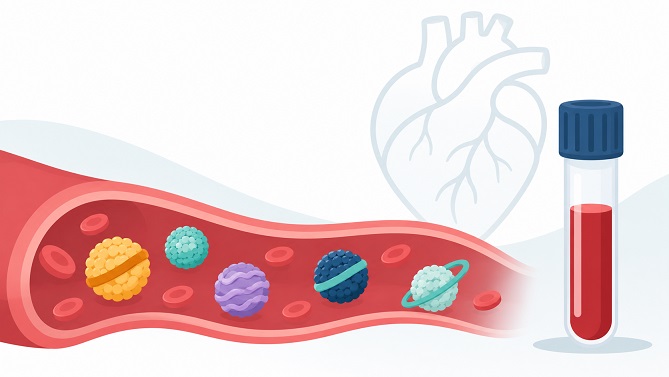
How Are Cholesterol Tests Interpreted? LDL, HDL, Triglycerides, ApoB and Lp(a)
Cholesterol is a type of fat that the body needs. However, high levels of certain fats and lipoproteins in the blood may increase the risk of cardiovascular disease. Cholesterol tests are usually performed on a blood sample; results are assessed alongside the person's overall health and cardiovascular risk.
What does a standard cholesterol test measure?
| Test | What information does it provide? |
|---|---|
| Total cholesterol | Shows the total amount of cholesterol in the blood. On its own, it is not sufficient to determine cardiovascular risk. |
| LDL cholesterol | Measures the cholesterol carried by LDL particles, which transport cholesterol to tissues. High LDL may be associated with plaque buildup in artery walls. |
| HDL cholesterol | Measures the cholesterol carried by HDL particles. HDL levels are assessed alongside other results and the person's overall risk. |
| Triglycerides | Measures another type of fat carried in the blood. Elevated levels may be associated with metabolic and cardiovascular risk. |
| Non-HDL cholesterol | Calculated by subtracting HDL from total cholesterol. It also provides information about the cholesterol carried by atherogenic particles other than LDL. |
The target LDL level is not the same for everyone. The target is determined by considering whether the person has a history of cardiovascular disease, as well as diabetes, blood pressure, smoking and other risk factors. Current guidelines recommend assessing the person's overall risk alongside LDL and non-HDL targets when making treatment decisions.
What does the ApoB test show, and who may be considered for testing?
ApoB (apolipoprotein B) is the main protein found on LDL and certain other particles that carry triglycerides. ApoB measurement provides information about the number of particles in the blood associated with atherosclerosis. It may therefore provide additional information when there may be a discrepancy between the LDL cholesterol result and the number of particles.
A doctor may consider ApoB testing particularly for:
- People with high triglyceride levels
- People with type 2 diabetes or cardiometabolic risk factors
- People with known cardiovascular disease who need further risk assessment despite appearing to be at their LDL target
- People whose LDL and non-HDL results are thought to be insufficient to explain their overall risk
The 2026 ACC/AHA guideline states that ApoB testing may be useful for assessing residual risk after LDL and non-HDL targets have been reached, particularly in people with high triglycerides, diabetes or cardiovascular disease.
Who is Lp(a) testing important for?
Lipoprotein(a), or Lp(a) for short, is an LDL-like particle. Its level in the blood is largely determined by inherited traits, and it is not included in a standard cholesterol panel; a separate blood test is requested to measure it.
The 2026 ACC/AHA guideline recommends measuring Lp(a) levels at least once in adulthood. The test may provide additional information, particularly for people with a family history of early-onset cardiovascular disease or high Lp(a), those with familial hypercholesterolaemia, and those whose overall risk is borderline. Elevated Lp(a) is considered a factor that increases cardiovascular risk.
The level considered risk-enhancing in guidelines is approximately 50 mg/dL; the threshold expressed in nmol/L may vary depending on the guideline and test used. As there is no exact conversion between these two units that applies to every test, the unit and laboratory reference range on the results report should be taken into account.
How are the results interpreted together?
Cholesterol levels are considered alongside age, blood pressure, diabetes, smoking, kidney disease, family history and whether the person has a history of cardiovascular disease. Similar LDL levels may indicate different levels of risk in different people. ApoB or Lp(a) may be added to the standard lipid panel when needed.
Ask your doctor or laboratory whether fasting is required before the test; preparation requirements may vary depending on the tests requested and the clinical situation. When reviewing your results, do not change your medication dose or stop taking cholesterol medication without your doctor's advice.
Wellcare Laboratories offers ApoB and Lp(a) testing in addition to standard cholesterol tests. You can discuss which tests are appropriate for you with your doctor.