
Creatinine and eGFR
What Do Creatinine and eGFR Tell Us About Kidney Health?
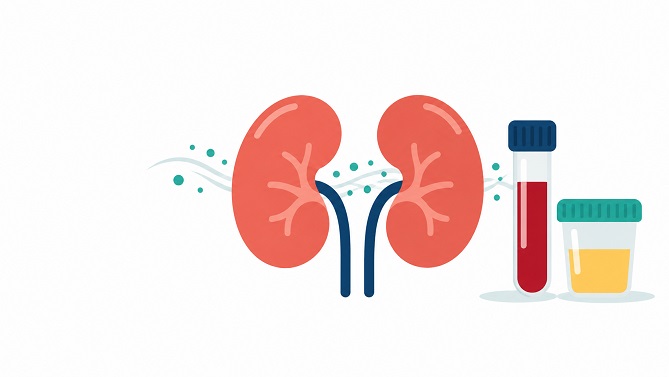
The kidneys filter waste products from the blood and help maintain the body's fluid and electrolyte balance. Blood and urine tests can be used together to assess kidney health. The most commonly used tests are creatinine, eGFR, urine albumin and urinalysis.
What is the difference between creatinine and eGFR?
Creatinine is a waste product produced during normal muscle activity. The kidneys filter creatinine from the blood. An elevated blood creatinine level may suggest a reduction in the kidneys' filtering function; however, the result can also be affected by muscle mass, diet and certain medications.
eGFR (estimated glomerular filtration rate) is a calculated value that estimates how well the kidneys filter the blood. It is usually calculated using blood creatinine and certain personal details. For this reason, creatinine is interpreted alongside eGFR rather than assessed on its own.
What does a low eGFR mean?
A low eGFR indicates that the kidneys' filtering capacity may be reduced. A single low result does not establish a diagnosis of chronic kidney disease; the result may be related to temporary conditions, such as a recent illness or acute kidney injury.
When assessing chronic kidney disease, a reduction in kidney function or findings indicating kidney damage generally need to persist for at least three months. An eGFR that remains below 60, or persistent albumin leakage or other signs of kidney damage even when eGFR is higher, requires evaluation.
What does urine albumin indicate?
Albumin is a protein found in the blood. Healthy kidneys prevent most of this protein from passing into the urine. Detecting albumin in the urine may be an early sign of damage to the kidney filters; this can occur even when eGFR appears normal.
The urine albumin-to-creatinine ratio (UACR or ACR) measures urine albumin relative to urine creatinine. This ratio is more useful than measuring urine albumin alone because it accounts for variations in urine concentration. A UACR above 30 mg/g may indicate increased albumin excretion; the result is assessed alongside the clinical situation. A first-morning urine sample is preferred, but a sample collected during the day may also be used when appropriate.
Are urinalysis and a urine albumin test the same?
No. Urinalysis helps assess the general characteristics of urine and findings such as blood, protein, glucose and white blood cells. Microscopic examination may also be performed when necessary.
UACR, on the other hand, is a separate test that specifically assesses the amount of albumin in the urine more sensitively and quantitatively. A normal urinalysis result does not necessarily mean that UACR testing is unnecessary, depending on the person's risk factors. A doctor may request one or both of these tests when assessing kidney health.
| Test | Sample | What does it primarily assess? |
|---|---|---|
| Creatinine | Blood | A muscle-derived waste product that accumulates in the blood |
| eGFR | Calculated from a blood test result | The kidneys' estimated filtering capacity |
| UACR/ACR | Urine | Albumin leakage into the urine |
| Urinalysis | Urine | Blood, protein, white blood cells and other general urine findings |
Who may need these tests, and in which situations are they requested?
Chronic kidney disease may not cause symptoms in its early stages. For this reason, a doctor may request kidney tests, particularly for people with diabetes, high blood pressure, cardiovascular disease, a history of acute kidney injury or a family history of kidney disease. Blood or protein in the urine, or long-term use of certain medications that may affect the kidneys, may also warrant evaluation.
Kidney health is not assessed solely on the basis of creatinine or eGFR results. Blood and urine results, previous tests, current medications and the person's medical history are considered together. In some cases, repeat testing, blood tests or imaging may be needed.
Wellcare Laboratories offers creatinine, eGFR, urine albumin-to-creatinine ratio and urinalysis testing. You are advised to review your test results with your doctor.