
What Is NIPT?
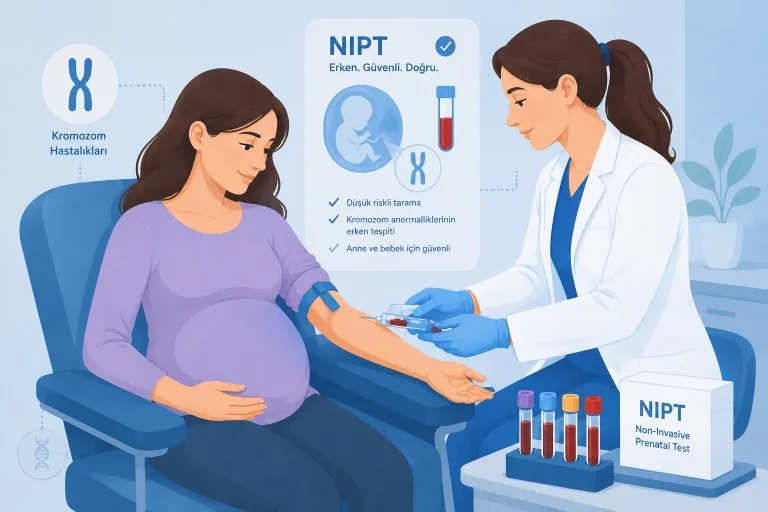

Why NIPT? / Benefits
Uses maternal blood
Can be performed early in pregnancy
Fast and reliable process
Provides high sensitivity
The Importance of NIPT Screening
Conventional Screening vs NIPT
Double / Quadruple Screening
Conventional Method
- Risk is calculated using biochemical markers in maternal blood and ultrasound findings.
- Accuracy is lower than that of NIPT.
- Sensitivity is approximately 80–85%, and the false-positive rate is approximately 5%.
NIPTCell-Free DNA Test
Next-Generation Method
- Cell-free fetal DNA (DNA from the baby) in maternal blood is analysed directly.
- Provides much higher accuracy, particularly for Trisomy 21, 18 and 13.
- A more advanced, targeted and sensitive screening method.
- Sensitivity is above 99%, and the false-positive rate is below 0.1%
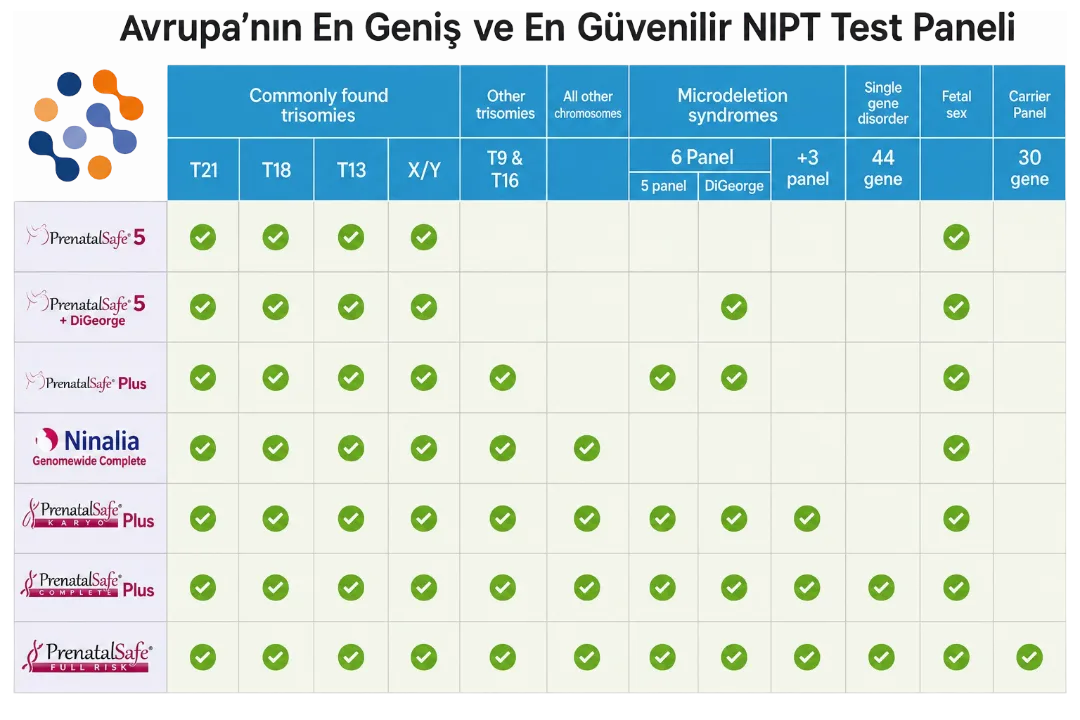
NIPT Test Options
PrenatalSafe5
- Screens for aneuploidies of chromosomes 21, 18, 13 and the sex chromosomes (X and Y)
- Determination of fetal sex
PrenatalSafe5 + DiGeorge
- Screens for aneuploidies of chromosomes 21, 18, 13 and the sex chromosomes (X and Y)
- Determination of fetal sex
- Screens for the microdeletion associated with DiGeorge syndrome
PrenatalSafePlus
- Screens for aneuploidies of chromosomes 21, 18, 13, 9, 16 and the sex chromosomes (X and Y)
- Determination of fetal sex
- Screens for microdeletions associated with DiGeorge syndrome, 1P36 deletion syndrome, Angelman syndrome, Prader-Willi syndrome, Cri-du-chat syndrome and Wolf-Hirschhorn syndrome
Ninalia
- Screens for aneuploidies of all chromosomes, including the sex chromosomes
- Determination of fetal sex
PrenatalSafeKaryo Plus
- Screens for aneuploidies of all chromosomes, including the sex chromosomes
- Determination of fetal sex
- Screens for microdeletions associated with DiGeorge syndrome, 1P36 deletion syndrome, Angelman syndrome, Prader-Willi syndrome, Cri-du-chat syndrome, Wolf-Hirschhorn syndrome, Jacobsen syndrome, Langer-Giedion syndrome and Smith-Magenis syndrome
PrenatalSafeComplete Plus
- Screens for aneuploidies of all chromosomes, including the sex chromosomes
- Determination of fetal sex
- Screens for microdeletions associated with DiGeorge syndrome, 1P36 deletion syndrome, Angelman syndrome, Prader-Willi syndrome, Cri-du-chat syndrome, Wolf-Hirschhorn syndrome, Jacobsen syndrome, Langer-Giedion syndrome and Smith-Magenis syndrome
- Screens for single-gene disorders in the fetus using GeneSafe
PrenatalSafeFull Risk
- Screens for aneuploidies of all chromosomes, including the sex chromosomes
- Determination of fetal sex
- Screens for microdeletions associated with DiGeorge syndrome, 1P36 deletion syndrome, Angelman syndrome, Prader-Willi syndrome, Cri-du-chat syndrome, Wolf-Hirschhorn syndrome, Jacobsen syndrome, Langer-Giedion syndrome and Smith-Magenis syndrome
- Screens for single-gene disorders in the fetus using GeneSafe
- Performs carrier screening in parents using GeneScreen
How Is PrenatalSafe® Performed?
From weeks 9-10 of pregnancy, the amount of circulating fetal DNA is sufficient to ensure the test's high specificity and sensitivity. The test is performed using a simple blood sample taken from the mother at a gestational age of at least 10 weeks.
Through laboratory analysis, cell-free fetal DNA is isolated from the plasma component of the mother's blood.
Then, through an advanced technological process, chromosomal regions of circulating fetal DNA are sequenced at a high read depth (~ 30 million sequences) using innovative massively parallel sequencing (MPS) technology covering the entire fetal genome, employing market-leading Illumina Next-Generation Sequencing (NGS) technology. Finally, chromosomal sequences are quantified through bioinformatic analysis to identify the presence of any fetal chromosomal aneuploidies. Test failure rates are among the lowest (<%0.1).
- PrenatalSafe ® is offered by Eurofins Genoma Group laboratories with a choice of six prenatal screening levels, each with a different level of detail. It is the most technologically advanced and comprehensive Non-Invasive Prenatal Screening Test currently available. With PrenatalSafe® Karyo, it is now possible to screen for other chromosomal abnormalities at the karyotype level (autosomal abnormalities, all deletions and duplications larger than 7 mb). Existing non-invasive prenatal tests screen for aneuploidies and microdeletions. PrenatalSafe® Karyo also provides karyotype-level information by screening for rare aneuploidies and segmental chromosomal imbalances (gains and losses) in every chromosome of the fetal genome. Click to explore PrenatalSafe test options.
- GeneSafe™ goes even further and, through analysis of cfDNA obtained from maternal plasma, screens for several clinically significant and life-changing genetic disorders that are not screened for by current NIPT technology. Click to explore GeneSafe test options.
We're Just a Message Away
Contact Us on WhatsAppAbout NIPT and PrenatalSafe®
Frequently Asked Questions
What is NIPT?
NIPT is a prenatal screening test that assesses the baby's risk of certain chromosomal conditions by examining fragments of placental cell-free DNA in the mother's blood. It is most commonly used to screen for Down syndrome, Edwards syndrome and Patau syndrome. It is not a definitive diagnostic test.
Are NIPT and the fetal DNA test the same thing?
Yes. The terms “fetal DNA test”, “DNA test from maternal blood” and “NIPT” generally refer to the same screening in everyday use. PrenatalSafe® is a brand of NIPT with different coverage options.
When is NIPT performed?
PrenatalSafe® can be performed from week 10 of pregnancy. Before testing, it is important to assess gestational age, viability and the number of babies by ultrasound.
How is NIPT performed? Can it harm the baby?
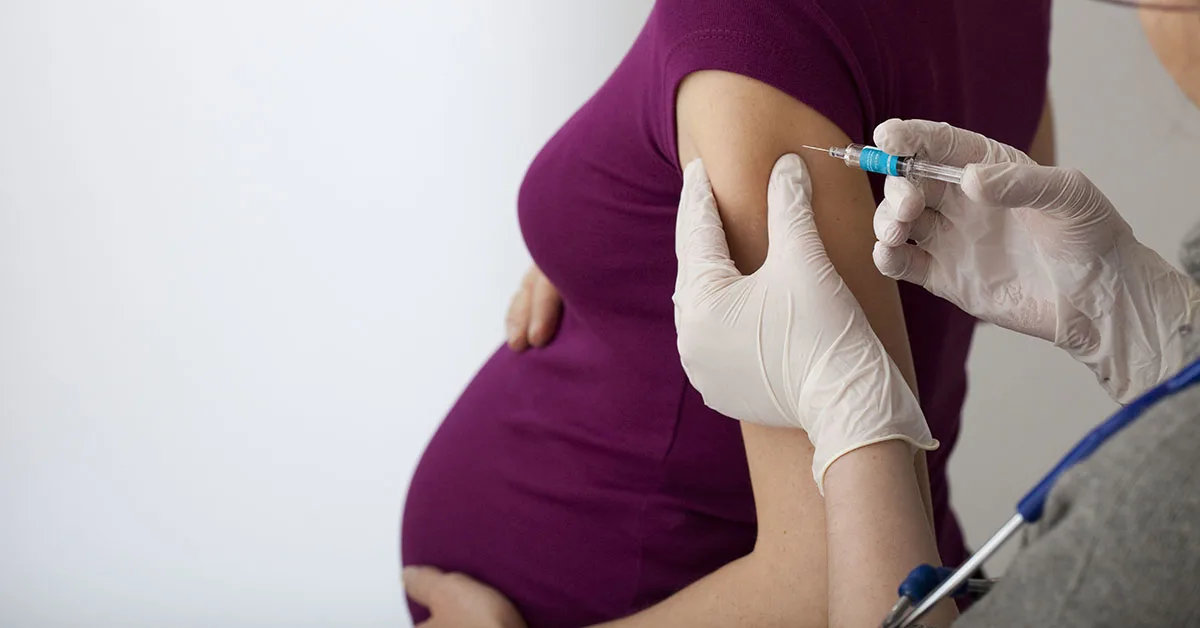
A blood sample is taken from the mother's arm. As the procedure does not involve the baby or the gestational sac, it does not carry a procedure-related risk of miscarriage. Fasting is generally not required for NIPT.
Is NIPT only offered to pregnant women over 35?
No. It can be considered for pregnant women who want prenatal chromosomal screening, regardless of age. The appropriate test is selected based on the characteristics of the pregnancy and the expectant mother's preferences.
What is the difference between NIPT and the double or quadruple screening test?
Double and quadruple screening tests calculate risk using biochemical markers in the mother's blood and relevant clinical information. NIPT uses cell-free DNA analysis and provides higher screening performance for common trisomies. Both are screening tests; high-risk results are confirmed through diagnostic testing when necessary.
Are all NIPT tests the same?
No. Tests may differ in the chromosomes and conditions screened for, the method used, test accreditation, clinical validation data, suitability for the type of pregnancy and post-result support. Comparisons should not be based solely on the brand name or the number of conditions screened for.
What should I consider when choosing NIPT?
You should find out whether the test is suitable for your pregnancy, which conditions it screens for, its performance for each condition and which laboratory performs the analysis. Understanding what happens if no result can be provided or a high risk is identified is also an important part of choosing a test.
What is PrenatalSafe®?
PrenatalSafe® is an ISO 15189-accredited prenatal screening test offered by Eurofins Genoma in Italy. It offers different panels, ranging from options that assess common trisomies to those that screen for certain additional chromosomal changes and single-gene disorders.
Why might I choose PrenatalSafe®?
Reasons for choosing PrenatalSafe include Eurofins Genoma's genetic laboratory infrastructure, published clinical performance data and panel options for different needs. Registration and sample collection are provided through Wellcare, with support for selecting a test suitable for your pregnancy and reviewing the result with your doctor.
Are there data on the scientific performance of PrenatalSafe?
Yes. The manufacturer's information documents provide clinical performance data for common trisomies and some additional chromosomal conditions. These data should be assessed separately for each group of conditions; a high success rate for one condition does not imply the same result for the entire panel.
Why is positive predictive value, or PPV, important?
PPV refers to the probability that a high-risk result truly reflects the condition in question. It varies according to the prevalence of the condition being screened for and the characteristics of the population tested. Therefore, PPV values reported in different studies do not, on their own, establish a definitive ranking of superiority among brands.
Why is laboratory accreditation important?
ISO 15189 accreditation means that a medical laboratory’s quality and technical competence have been independently assessed within a defined scope. When choosing a test, it is important to know which laboratory and which analyses the accreditation covers. Accreditation does not mean that results are 100 percent certain.
Which PrenatalSafe® package should I choose?
The choice should be based on the characteristics of your pregnancy, ultrasound findings, family history and the information you wish to obtain. If the main aim is to screen for common trisomies, a panel suited to this purpose may be considered. If additional analyses are being considered, the information they can provide and their limitations should be discussed before testing.
What is the difference between PrenatalSafe® 5 + DiGeorge and Plus?
PrenatalSafe® 5 + DiGeorge adds screening for DiGeorge syndrome, known as 22q11.2 deletion, to the scope of the basic panel. PrenatalSafe® Plus offers broader screening for certain additional trisomies and microdeletions. Screening performance for these additional conditions differs from that for common trisomies.
What does PrenatalSafe® Karyo Plus offer?
Karyo Plus screens for changes in chromosome number across all chromosomes and, within the limitations of the method, certain DNA losses and gains, as well as selected microdeletions. Although it offers broader chromosomal screening, it does not replace karyotyping or chromosomal microarray analysis performed using amniocentesis samples.
What is the difference between PrenatalSafe® Complete Plus and Full Risk?
Complete Plus adds GeneSafe™ analysis for certain single-gene disorders to expanded chromosomal screening. The Full Risk package also includes carrier screening for the mother and father. Parental carrier screening is a separate analysis from NIPT for the baby. The PrenatalSafe® Full Risk panel is the most comprehensive NIPT panel currently on the market.
What is RhSafe®? Is it necessary for every pregnant woman?
RhSafe® is a separate assessment used to obtain information about the baby’s RhD status in RhD-negative mothers. It is not a screening test for chromosomal disorders. Its suitability and how the result will be used in pregnancy care are determined by the obstetrician; the decision on preventive anti-D administration should not be changed solely on the basis of the expectant mother’s own interpretation.
Can PrenatalSafe® be performed in twin or IVF pregnancies?
It can be performed under appropriate conditions. However, not all additional analyses are equally suitable for twin pregnancies. IVF, donor conception or a history of a vanishing twin must be reported before testing; the panel is selected based on this information.
Where can I have a PrenatalSafe® test in Northern Cyprus?
Registration and sample collection are available at the Wellcare Laboratories branches at Wellcare Health Clinic and Miracle Hospital in Nicosia, and at Medicalport Tunççevik Hospital in Kyrenia.