
Pregnancy and blood tests
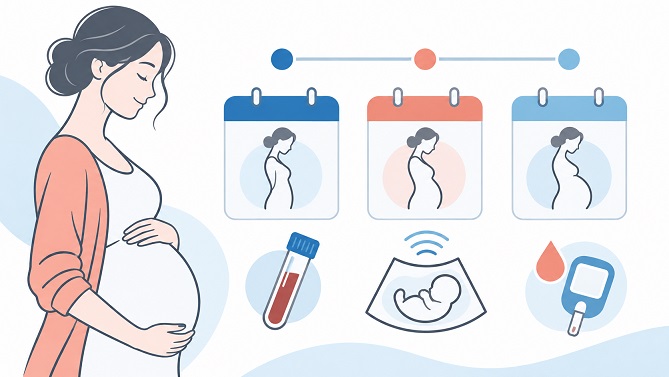
Which Blood Tests Are Done During Pregnancy, and When?
Tests performed during pregnancy help assess the expectant mother's health, detect certain treatable infections and monitor the baby's development. There is no single testing schedule that applies to every pregnancy. Tests are planned by the doctor based on pregnancy history, health status, previous results and the country's antenatal care programme.
Gestational age is usually calculated from the first day of the last menstrual period. The timings below are a general guide.
First trimester: From the first appointment to the end of week 13
At the first antenatal appointment, preferably early in pregnancy, the following tests may be considered:
- Complete blood count: Provides information about anaemia and blood cells.
- Blood group, Rh factor and red blood cell antibody screening: Provides a baseline assessment for Rh incompatibility or blood group antibodies.
- Infection screening: Screening for HIV, hepatitis B and syphilis is important in antenatal care. The CDC also recommends hepatitis C screening during every pregnancy; practices may vary by country and local programme. Some infection tests are planned according to the person's age or risk factors.
- Haemoglobinopathy screening: Screening for thalassaemia or sickle cell disease may be performed according to the local programme and personal/family history.
Screening options for chromosomal conditions can also be discussed with the doctor during this period. Combined first-trimester screening may include a blood test and a nuchal translucency measurement. NIPT is a screening test that can generally be performed on a maternal blood sample from week 10 of pregnancy. These tests do not provide a diagnosis; the doctor may recommend further investigations to confirm high-risk results. The decision to use more than one screening method together should be made in consultation with the doctor.
Second trimester: Weeks 14–27
- Maternal serum AFP or quadruple screening: May be offered at approximately 15–22 weeks in some antenatal care programmes. The appropriate screening test depends on previous tests and the doctor's assessment.
- Gestational diabetes screening: Usually performed at 24–28 weeks. For people who have previously had gestational diabetes or are at high risk of diabetes, the doctor may plan an earlier assessment. The type of test and how it is performed vary according to the protocol followed.
A detailed ultrasound scan is usually performed at 18–22 weeks; it is not a blood test but an imaging examination that assesses the baby's structural development.
Third trimester: From week 28 until birth
Repeating the complete blood count and blood antibody screening around week 28 is recommended in some antenatal care programmes. Whether anti-D administration is needed in Rh-negative expectant mothers is determined by the antibody results and the doctor's assessment.
Repeat testing for HIV, syphilis, hepatitis or other sexually transmitted infections is not performed at the same time for everyone; new exposure, individual risk and local recommendations are taken into account.
Does every pregnant woman have the same additional tests?
No. Tests such as TSH, vitamin D, B12, folate, toxoplasma and CMV may not be routinely requested for every pregnant woman. The doctor may consider these tests separately if there are factors such as symptoms, known medical conditions, dietary habits, previous pregnancies or a history of exposure.
Investigations that do not require a blood sample, such as urine culture and urinalysis, may also be important in antenatal care. The doctor overseeing the pregnancy should decide which tests are performed, when they are performed and how the results are interpreted.
Samples for pregnancy tests requested by a doctor can be provided at Wellcare Laboratories. Test results should be assessed by your doctor alongside gestational age and clinical information.