
Complete Blood Count (CBC)
How Are Complete Blood Count (CBC) Results Interpreted?
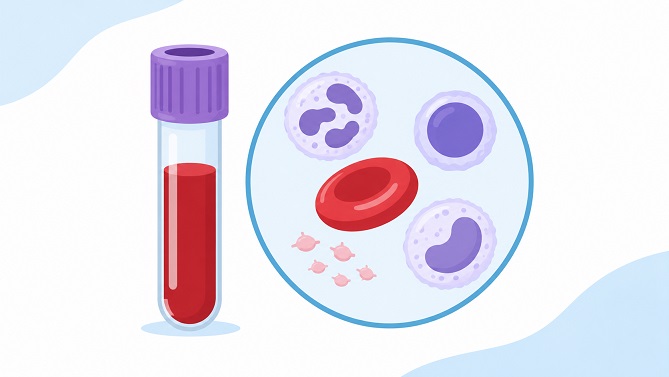
A complete blood count is a basic blood test that measures the number and certain characteristics of blood cells. It provides information about red blood cells, white blood cells and platelets. It may be used to assess anaemia, suspected infection and certain blood disorders; however, it cannot establish a definitive diagnosis on its own.
Which values are measured in a complete blood count?
1-Hemoglobin and red blood cells
Red blood cells carry oxygen from the lungs to the tissues. Haemoglobin, found in these cells, is the protein that helps transport oxygen. Haematocrit indicates the proportion of blood made up of red blood cells.
Low haemoglobin levels or red blood cell counts may be associated with anaemia. However, in addition to iron deficiency, anaemia can have other causes, including B12 or folate deficiency and chronic diseases. A complete blood count does not directly measure iron stores; ferritin and other tests may be requested if needed.
Red blood cell indices such as MCV, MCH and MCHC in a complete blood count provide information about the size and haemoglobin content of red blood cells. These values may help investigate possible causes of anaemia, but they do not identify the cause on their own.
2-Leukocyte (white blood cell)
Leukocytes are part of the immune system and play a role in fighting infections. In addition to the total white blood cell count, a complete blood count may also report neutrophils, lymphocytes and other types of white blood cells if requested.
A high or low white blood cell count can occur for many different reasons, including infections. The result should be assessed alongside the person's symptoms, physical examination and other test results.
3-Platelet
Platelets are cell fragments that help stop bleeding. Low or high platelet counts may be associated with various conditions; the cause cannot be determined from a single result. The doctor decides whether further investigations are needed by considering the extent of the change, the other complete blood count results and the person's health status.
Does a single high or low value mean you have a disease?
No. A value flagged as outside the reference range on a test report does not, on its own, mean that a serious disease is present. Mild deviations may be temporary or related to the person's age, sex and health status. Sample and measurement conditions are also taken into account when assessing results.
Reference ranges may vary depending on the laboratory and the method used; different ranges may apply to children, adults and certain specific circumstances. The result should therefore be assessed alongside the reference range stated in the report and the clinical information.
Is fasting required for a complete blood count?
If only a complete blood count is being performed, no special preparation or fasting is generally required. If other tests requiring fasting have also been requested using the same blood sample, the preparation requirements for those tests should be followed.
How should I assess my results?
Complete blood count results are interpreted alongside symptoms, physical examination findings, previous test results and medications being taken. Changes in one or more values may sometimes require repeat testing or further investigations; the doctor makes this decision.
Complete blood count testing is available at Wellcare Laboratories. Consult your doctor for an assessment of your results; do not diagnose yourself or start treatment based on a single value in the report.