

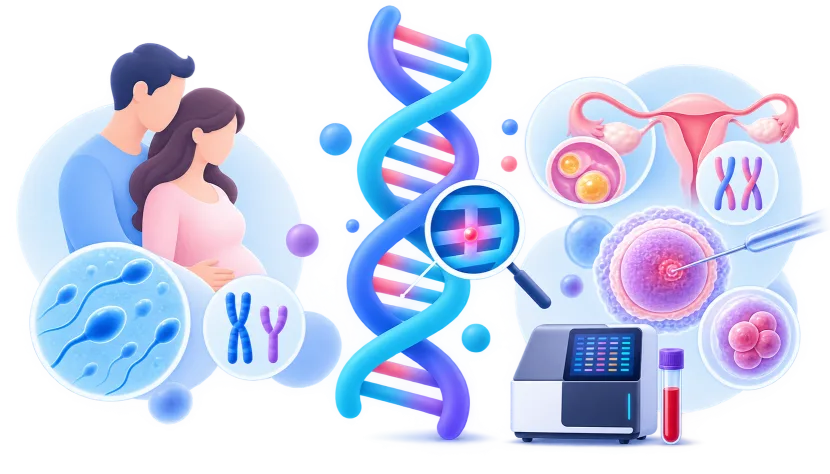
What Is Fertiscan?
The test can help explain the cause of infertility, plan assisted reproductive treatment and evaluate possible hereditary risks. Approximately 10-15% of male infertility cases and approximately 8-10% of female infertility cases may be associated with genetic changes. Chromosomal abnormalities and Y chromosome microdeletions are not detected by an NGS panel; if the sperm count is below 5 million/mL, karyotyping and Y microdeletion (AZF) testing should be performed first.
Who Can It Be Recommended For?
- ✓ Couples having difficulty conceiving
- ✓ Those with unexplained infertility
- ✓ Those with repeated insemination or IVF failure
- ✓ Those with recurrent pregnancy loss
- ✓ Women diagnosed with premature ovarian insufficiency or low ovarian reserve
- ✓ Those with problems in oocyte maturation or embryo development
- ✓ Men with azoospermia, oligospermia, or sperm motility or morphology disorders
- ✓ Those with a family history of infertility or early menopause

FertiScan Female Infertility Panels
General Female Infertility PanelNGS Panel
- A comprehensive next-generation sequencing (NGS) panel that investigates both common and rare genetic causes of female infertility. It analyzes more than 70 genes associated with primary ovarian insufficiency, ovarian dysfunction, ovarian dysgenesis, oocyte maturation defects, early embryonic development disorders and recurrent pregnancy loss.
- ANXA5, BMP15, C4BPA, CAPN10, CD46, CEP250, CGB, CLPP, CYP11A1, CYP17A1, CYP19A1, CYP21A2, DIAPH2, EIF2B2, EIF2B4, EIF2B5, ERCC6, ESR1, ESR2, FANCM, FIGLA, FLJ22792, FMR1, FOXL2, FOXP3, FSHB, FSHR, GALT, GDF9, GNRH1, GNRHR, HARS2, HFM1, HLA-G, HSD17B4, IRS1, KHDC3L, KISS1, KISS1R, LARS2, LHB, LHCGR, LHR, MCM8, MCM9, MRPS22, MSH5, NALP7, NLRP10, NOBOX, NR5A1, NUP107, OSBPL5, PADI6, PATL2, PMM2, POF1B, PROKR1, PSMC3IP, SOHLH1, STAG3, SYCE1, SYCP3, TACR3, TLE6, TUBB8, C10orf2, WEE2, WNT6, ZP1, ZP3
Primary Ovarian Insufficiency / Ovarian DysfunctionNGS Panel
- A comprehensive next-generation sequencing (NGS) panel that evaluates genetic causes associated with conditions such as early menopause, low ovarian reserve, menstrual irregularity and poor response to ovarian stimulation.
- BMP15, CLPP, CYP17A1, CYP19A1, DIAPH2, EIF2B2, EIF2B4, EIF2B5, ERCC6, FANCM, FIGLA, FLJ22792, FMR1, FOXL2, FSHB, FSHR, GALT, GDF9, GNRH1, GNRHR, HARS2, HFM1, HSD17B4, KISS1, KISS1R, LARS2, LHB, LHCGR, LHR, MCM8, MCM9, MRPS22, MSH5, NOBOX, NUP107, NR5A1, C10orf2, PATL2, PMM2, POF1B, PSMC3IP, SOHLH1, STAG3, SYCE1, TACR3, TUBB8, ZP1, ZP3, WEE2
Ovarian DysgenesisNGS Panel
- A next-generation sequencing (NGS) panel that evaluates genetic causes associated with developmental and functional disorders of the ovaries.
- BMP15, FSHR, MCM9, MRPS22, NUP107, C10orf2, PSMC3IP, SOHLH1, HSD17B4, HARS2, STAG3
Oocyte Maturation DisorderNGS Panel
- A next-generation sequencing (NGS) panel that analyzes genes associated with failure of retrieved eggs to mature, recurrent fertilization failure, or arrest of early embryonic development.
- PATL2, TUBB8, ZP1, ZP3, WEE2
Preimplantation Embryonic LethalityNGS Panel
- A next-generation sequencing (NGS) panel that analyzes genes associated with arrest of embryonic development after fertilization, before the embryo implants in the uterus.
- PADI6, TLE6, KHDC3L
Recurrent Pregnancy LossNGS Panel
- A comprehensive next-generation sequencing (NGS) panel that analyzes 14 genes that may be associated with recurrent pregnancy loss.
- ANXA5, C4BPA, CD46, CEP250, CGB, FOXP3, HLA-G, KHDC3L, NALP7, NLRP10, OSBPL5, PROKR1, SYCP3, WNT6
- The standard evaluation consists of karyotyping, antiphospholipid antibodies, thyroid tests and uterine imaging; this panel is not routinely recommended.
Polycystic Ovary SyndromeNGS Panel
- A next-generation sequencing (NGS) panel that evaluates certain genetic variants associated with polycystic ovary syndrome (PCOS). The test alone neither establishes nor excludes a diagnosis of PCOS.
- CAPN10, IRS1
Ovarian Stimulation Response / Ovarian HyperstimulationNGS Panel
- A next-generation sequencing (NGS) panel that evaluates genetic factors associated with the response of the ovaries to stimulating medications in IVF treatment.
- CYP19, ESR1, ESR2, FSHR, IRS1
FertiScan Male Infertility Panel
General Male Infertility PanelNGS Panel
- A comprehensive next-generation sequencing (NGS) panel that analyzes 50 genes associated with azoospermia, reduced sperm count, motility disorders, abnormal sperm morphology, and spermatogenesis and fertilization defects.
- ADGRG2, AK7, AKR1C4, AR, AURKC, BRDT, CATSPER1, CATSPER2, CFAP43, CFAP44, CFAP69, CFTR, DNAH1, DNAH6, DPY19L2, FANCM, FSHB, FSHR, GALNTL5, GATA4, HSF2, KLHL10, LHCGR, MAMLD1, MEIOB, NANOS1, NPAS2, NR0B1, NR5A1, PLCZ1, PMFBP1, RXFP2, SEPT12, SLC26A8, SOHLH1, SPAG17, SPATA16, SPGF2, SPINK2, SRY, SUN5, SYCE1, SYCP3, TAF4B, TDRD9, TEX11, TEX14, TEX15, TSGA10, ZMYND15
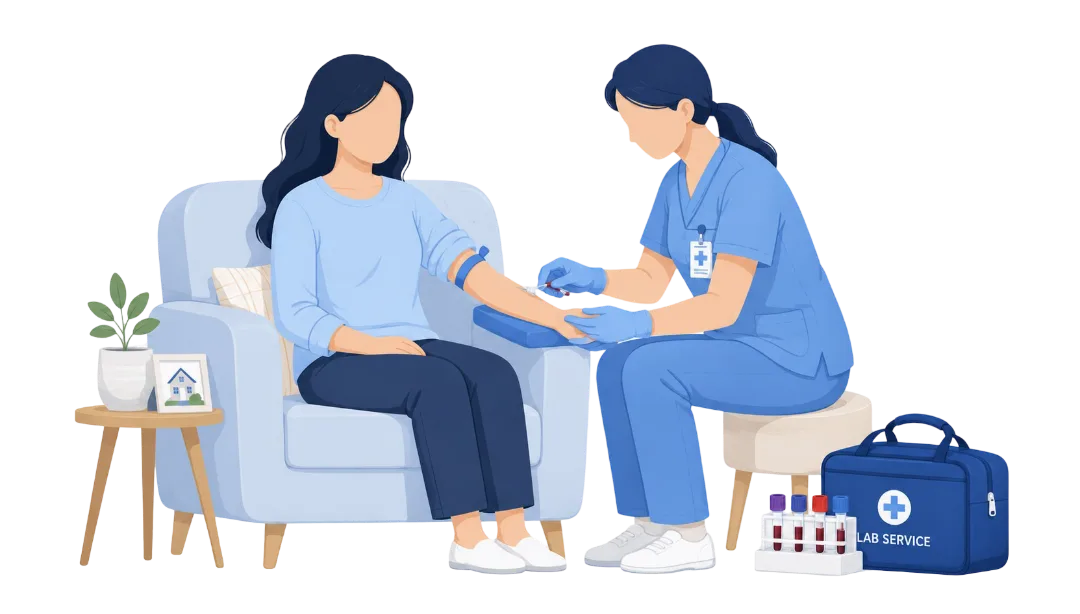
How Is the Test Performed?
The turnaround time is approximately 15-20 working days.
What Do the Results Mean?
A negative result indicates that no explanatory change was found in the genes examined; however, it does not rule out all genetic and non-genetic causes of infertility.
FertiScan does not replace hormone tests, ultrasound, semen analysis, karyotyping and other infertility investigations. Results should be evaluated together with clinical findings.

About FertiScan
Frequently Asked Questions
What is the FertiScan test, and what is it used for?
FertiScan® is a group of tests that investigates genetic changes that may be associated with infertility in women and men. Genes associated with reproductive health are analysed using Next-Generation Sequencing (NGS) technology. It may help investigate genetic causes, particularly in cases of unexplained infertility, certain sperm production disorders, egg development problems and familial infertility.
How can you tell whether infertility is genetic?
There are many reasons for being unable to conceive, and some may be genetic. A family history of infertility, early menopause, severely reduced sperm production or egg maturation problems may require genetic investigation. Genetic tests such as FertiScan investigate whether specific genes contain changes associated with infertility. Test selection should be based on clinical examination and previous investigations.
Which conditions does the FertiScan female infertility test investigate?
FertiScan female panels investigate primary ovarian insufficiency, ovarian development disorders, oocyte maturation defects and certain genetic conditions involved in early embryo development. Eurofins Genoma's comprehensive female infertility panel examines approximately 70 genes. More targeted panels for specific clinical problems are also available. The test does not explain the cause of every case of diminished ovarian reserve or infertility.
Which problems does the FertiScan male infertility test investigate?
The FertiScan male infertility panel analyses 50 genes associated with sperm production and function. It may be used to investigate certain genetic causes of azoospermia, severely reduced sperm count, abnormalities in sperm motility and morphology, or fertilisation problems. Whether the test is needed is determined in conjunction with semen analysis, hormone tests and a urological assessment.
Can FertiScan testing be performed for recurrent IVF failure or miscarriages?
In some couples, recurrent IVF failures or pregnancy losses may have underlying genetic causes. FertiScan may be considered when certain disorders of egg maturation, fertilisation or early embryo development are suspected. However, not every IVF failure indicates a genetic disorder. Broad gene panels are not routine first-line tests for recurrent miscarriages; it is important to investigate standard causes first.
How is the FertiScan test performed, and how many days do results take?
For the FertiScan test, a blood sample of approximately 3 mL is usually taken from the arm. DNA is extracted from the blood sample, and the relevant genes are analysed using Next-Generation Sequencing (NGS) technology. Results are available in approximately 15–20 working days. Fasting is generally not required for the procedure; the laboratory can provide information on any specific preparation requirements.
Does FertiScan replace karyotype, Y chromosome microdeletion or Fragile X testing?
No. FertiScan examines the DNA sequences of specific genes; however, it does not assess large chromosomal changes detected by karyotype analysis or Y chromosome AZF microdeletions in a way that replaces these tests. A separate test is also required for the CGG repeat expansion in the FMR1 gene associated with Fragile X. The physician may request these additional investigations based on the clinical findings.
What does a positive or negative FertiScan result mean?
A positive result may indicate that a genetic change potentially associated with infertility has been found in one of the genes examined. The change's association with disease, mode of inheritance and clinical significance are assessed separately. A negative result indicates that no explanatory change was detected within the scope of the test. However, it does not rule out all genetic or non-genetic causes of infertility.
Does the FertiScan test increase the chance of IVF success?
FertiScan is not a treatment that directly increases the chance of pregnancy. In some patients, identifying a genetic cause may help with planning further investigations, genetic counselling or reproductive treatment options. However, there is no guarantee that having the test will improve IVF success. Results need to be assessed in the context of the individual patient and couple.
Where can I have the FertiScan genetic infertility test in Cyprus, and how much does it cost?
FertiScan is among the genetic tests offered in Northern Cyprus through Wellcare Laboratories in collaboration with Eurofins Genoma. Information is available from Wellcare centres in Nicosia and Kyrenia. The test price may vary depending on the female or male infertility panel and the range of genes selected. You can contact Wellcare Laboratories for current pricing and information about the appropriate panel.