
Your Partner in Health and Wellness
Location
HIV & AIDS
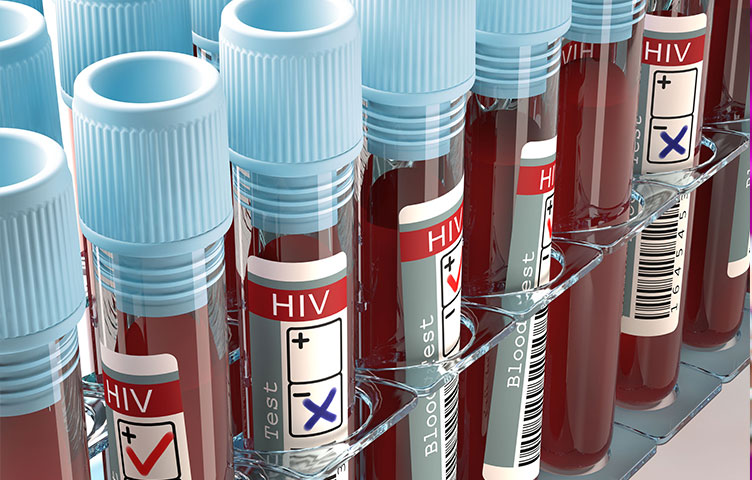
Who is concerned by HIV?
HIV, the human immunodeficiency virus, can affect anyone in the world and in the TRNC, regardless of religion, language, ethnic origin, occupation, age, sexual orientation, or whether they are a woman, man or child. HIV is the disease of our age, and it is everyone's responsibility to be informed about it. HIV concerns all of us.
What is the situation worldwide?
According to data from UNAIDS, a United Nations body, although the numbers of new HIV infections, of progression to AIDS thanks to wider access to treatment, and of disease-related deaths have declined, 1.7 million new HIV infections were diagnosed worldwide in 2018. In total, 37.9 million people were living with HIV worldwide. Again in 2018, 770 thousand people died from AIDS-related conditions.
What is HIV (Human Immunodeficiency Virus)?
It is a virus that is called the "Human Immunodeficiency Virus" in English. If a person infected with HIV does not receive treatment, the immune system becomes weakened and ineffective. The virus settles in the white blood cells known as CD4 lymphocytes and begins to multiply. Over many years, it causes the immune system to weaken.
What is AIDS (Acquired Immune Deficiency Syndrome)?
AIDS, called "Acquired Immune Deficiency Syndrome" in English, is the group of diseases caused by HIV. In a healthy person, the immunity, that is, the CD4 count, is normally between 600 and 1200. However, in an HIV-positive person who has progressed to the AIDS stage, the CD4 count has fallen below 200. When the CD4 count falls below 200, the person's immune system is severely weakened, and opportunistic infections and cancers can develop much more easily. In short, not every HIV-positive person has AIDS. We can say that AIDS is the advanced, final stage of HIV disease.
What is the course of the disease after the HIV virus enters the body?
After entering the body, the virus generally causes flu-like complaints within a month. For this reason, the disease can easily be missed in the first stage. Patients are generally sent home with a prescription for the flu, and this period is given a name. During this period there may be no signs or symptoms at all, but there may also be complaints and findings such as rapid weight loss, dry cough, recurrent fever or night sweats, unexplained fatigue, and enlarged lymph nodes in the armpits, groin or neck.
After this period, the disease enters a silent, that is, latent, period. During this period, without causing many complaints or signs, the CD4 count gradually begins to be depleted and to fall over the years (2-10 years). As explained above, when the CD4 count falls below 200, the person's immune system is severely weakened, and opportunistic infections and cancers begin to appear.
How is HIV diagnosed?
To diagnose HIV, it is enough to have a blood test at any laboratory. A negative result during the window period (18-45 days) does not rule out infection, and the test should be repeated; a reactive result is confirmed with an additional test. In our country, HIV testing is available in all state hospitals. Testing is also performed at many private hospitals and laboratories. At Nicosia Dr. Burhan Nalbantoğlu State Hospital, it is even possible to be tested without giving your name. All you need to do is to consult an infectious diseases specialist.
How is the disease transmitted?
The virus can enter the body during unprotected oral, anal and vaginal sexual intercourse. HIV and other sexually transmitted infections can be transmitted through every type of unprotected sexual intercourse.
It can also be transmitted through transfusion of blood products, sharing syringes, from mother to baby, through tattoos or piercings, and through accidental needle-stick injuries (from an HIV-positive person).
How is HIV not transmitted?
HIV is not transmitted through social contact, kissing, hugging, being in the same environment, using the same fork or spoon, the same swimming pool or the same toilet, mosquito bites, or saliva or sweat unless they contain visible amounts of blood. In short, contrary to what is often believed, HIV is not transmitted through everyday social contact.
Who is at risk? Who should be tested first?
To reduce the spread of HIV in society, we need to make sure that undiagnosed patients are diagnosed. First of all, high-risk groups must be identified, and people in these groups need to be tested more often than people in the general population.
If you are in a risk group, be sure to get tested without delay.
Risk groups;
- People who have unprotected sex and have more than one partner
- People with intravenous drug dependence and those who share syringes
- People who have had a relationship with an HIV-positive person
- People who travel to, or live in, regions where HIV is highly prevalent
- People who have been subjected to sexual assault
- Men who have sex with men
Who should be tested, and how often?
- Everyone between the ages of 13 and 64 should be tested for HIV at least once.
- People with certain risk factors should be tested more often. These people should be tested at least once a year.
- Sexually active gay or bisexual men may benefit from more frequent testing (every 3 to 6 months).
I am in a risk group. How can I protect myself from HIV?
- Using a condom; HIV is transmitted through sexual intercourse when sexual fluids come into contact with the genitals, anus, mouth or open wounds. Using a condom is still the most reliable method of protection against HIV. In our country, condoms are available for both men and women. When used correctly, a condom greatly reduces the risk of HIV transmission, but does not eliminate it completely. It is important to check the expiry date of the condom and to make sure it has not been torn when opening the package and using it
- Receiving treatment; after HIV-positive people are successfully treated with current therapies, their risk of transmitting the virus can be reduced to almost nothing. If your partner is HIV-positive, support them in receiving treatment.
- PrEP (Pre-exposure prophylaxis); PrEP, which has been in use since 2012, is a medication regimen taken before sexual contact to reduce the risk of HIV transmission. It significantly reduces the risk of transmission.
- PEP (Post-exposure prophylaxis); this method, also known as post-exposure prophylaxis treatment, is a treatment that is started as soon as possible, preferably within the first 24 hours and at the latest within 72 hours, and taken without interruption for 28 days.
Is there a treatment for HIV? Does it kill?
HIV, which is on the World Health Organization's list of chronic diseases, can be kept under control with the advanced antiretroviral (HIV-suppressing) drug options available since 1996. With today's innovations, HIV can now be treated with a single tablet a day. HIV-positive people who start drug treatment at the right time can lead a good quality, healthy life. Even people who are diagnosed with HIV late and are at the AIDS stage can regain their health with drug treatment. In fact, thanks to advanced medicine today, HIV-positive mothers can have babies who do not carry the virus. HIV-positive people can continue their normal family and working lives.
Uzm. Dr. Emre Y. VUDALI
Specialist in Infectious Diseases and Clinical Microbiology