
Your Partner in Health and Wellness
Location
Do You Check Whether a Clinical Microbiology Specialist Is Available When Choosing Your Laboratory?
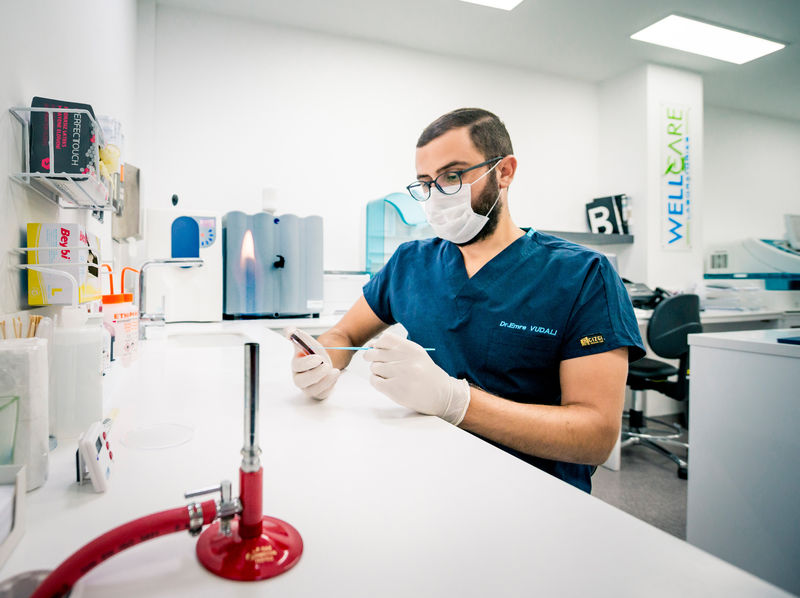
Microbiology is a branch of science that studies tiny living organisms called microorganisms, most of which can only be seen under a microscope. Many of these microorganisms cause diseases in humans. Chief among them are bacteria, viruses, fungi and parasites.
Diseases caused by these tiny organisms, which we cannot see with the naked eye, are generally called Infectious Diseases (Communicable Diseases). Tens of thousands of different microorganisms appear as disease agents.
In this unit, direct and indirect tests are performed for microorganisms that cause infection. In the laboratory, tests that guide the diagnosis, treatment and follow-up of infectious diseases are performed on patients' blood and all kinds of body fluids, tissue samples, excreta such as urine and stool, and various other samples. The subunits are the bacteriology, virology, mycology, parasitology and serology sections.
Bacteriology: Isolating and identifying the bacteria that cause infections in humans and determining their antibiotic susceptibility. (Typhoid, cholera, bacteria that cause throat infections, etc.)
Virology: Performing diagnostic tests for viruses that cause disease in humans (HPV, hepatitis, etc.)
Mycology: Isolating and identifying the fungi that cause disease in humans and testing their susceptibility to antifungals (antifungal drugs).
Parasitology: Investigating parasites and parasite eggs in stool, urine and some other body fluids.
Serology: An antibody-based diagnostic method for infectious diseases.
The main tests performed in the microbiology laboratory are as follows: diagnostic tests including culture tests, bacterial identification tests, antibiotic and antifungal susceptibility tests, antibiotic resistance investigations, direct microscopic examinations, stained preparation examinations, search for parasite eggs in stool, antigen screening tests, and antibody tests (serological tests).
When we speak of a microbiology laboratory, the first tests that come to mind are culture, bacterial identification and antibiotic susceptibility tests. In our laboratory, these tests are performed using international standards (API, biomerieux). With this system, bacteria are identified at a more advanced level than with classical methods, and information is also obtained about resistance mechanisms that cannot otherwise be revealed. This makes very important contributions to the treatment of infections. This information is especially important for coping with infections caused by multidrug-resistant bacteria, which cause hospital-acquired infections.