
Your Partner in Health and Wellness
Location
10 herbal formulas that are good for cough
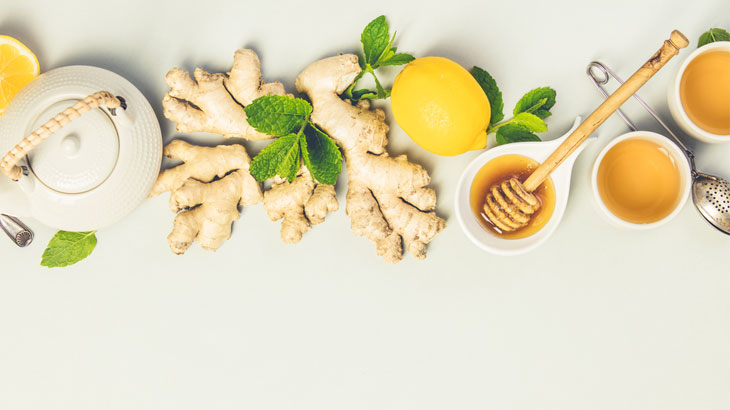
Herbal teas that prevent cough
Cough is an important health problem that, once it starts, does not go away easily and sometimes even causes coughing fits. To get rid of coughing fits that wake you up at night or can put you in an awkward position during an important meeting, it is especially necessary to make use of herbs.
FRESH OR DRIED QUINCE LEAVES
Quince fruit and leaves have been used for years in the treatment of cough. Their components are effective in throat infections and have a soothing effect on the throat. You can drink the flower and leaf parts of the plants by brewing them. If you are drinking it for treatment purposes, do not add sugar. You can drink about 2-3 cups a day, brewing dried quince leaves for 10-15 minutes and fresh quince leaves for 3-5 minutes.
ECHINACEA TEA
The echinacea plant is mainly recommended for protection against ailments such as the common cold, nasal catarrh and the flu. Studies show that echinacea prevents the damage that inflammation in the throat and lungs would cause. You can drink about 2 cups a day, brewed and with 1 teaspoon of honey added.
QUINCE, HONEY AND LINDEN
The tea obtained from this mixture is one of the best mixtures that can be made against cough. The tea made of quince, honey and linden soothes the throat and promotes recovery. You can drink about 2-3 cups a day.
GINGER, HONEY AND CLOVE
The volatile components in clove have an antiseptic and pain-relieving effect in infections of the mouth and throat and in infections caused by bacteria and viruses. Considering the anti-inflammatory effect of some components in ginger, you can take it as a course of treatment by mixing 1 tablespoon of honey, about 1 teaspoon of ground ginger and about 1 teaspoon of clove. If you wish, you can also add lemon to this mixture and take 1-2 teaspoons a day.
GROUND BLACK PEPPER AND HONEY
Ground black pepper has been shown in many studies to have immune-strengthening, anti-cancer, and anti-inflammatory and antispasmodic effects. For cough, you can gargle with its fruit brewed in water. You can also brew whole peppercorns in warm water and drink it with 1 teaspoon of honey added. However, if you have digestive system problems such as reflux, gastritis and ulcers, you need to consume this tea in limited amounts. Individuals with no health problems can consume about 2-3 teaspoons a day.
GREEN TEA AND CARDAMOM
While the high antioxidant property of green tea is now known by everyone, green tea combined with cardamom has a great effect on both the immune system and throat infections. You can use the strongly concentrated tea as a gargle, and you can drink about 2-3 cups of green tea with cardamom a day. However, if you have hypertension or tachycardia, do not exceed 2 cups a day.
QUINCE SEED TEA
Quince seed tea has a softening and soothing effect on cough. You can drink it after brewing 1 teaspoon of unground quince seeds in 1 cup of water for about 5-10 minutes. Because herbal teas generally have a mild effect, drinking them on an empty stomach, 30 minutes before meals or 1-2 hours after meals, increases the tea's positive effect.
GINGER, BLACK PEPPER, HONEY, LEMON, CINNAMON
By mixing 1 tablespoon of honey, 1 teaspoon of ground ginger, 1 teaspoon of ground black pepper, 1 teaspoon of ground cinnamon and half a lemon, and consuming 2-3 teaspoons a day between meals on an empty stomach, you can reduce the irritating effect of cough.
LICORICE ROOT, FUMITORY, GINGER
Add 1 teaspoon of ground licorice root, 1 teaspoon of fumitory and 1 teaspoon of ground ginger to 1 glass of boiled water and brew for 3-5 minutes. You can consume this tea 2-3 cups a day.
LINDEN TEA
The first tea that comes to mind when cough is mentioned is linden. Among its components, flavonoids show anti-inflammatory and pain-relieving effects, while there is much data that mucilages prevent irritation and soften the throat. For this reason, you can drink 2-3 glasses of tea a day against cough. Do not add sugar to linden tea used for treatment. Sugar can react with the active components in the tea. Honey should be added at temperatures below 40 degrees.
KEY POINTS OF HERBAL MIXTURES AND HERBAL TEAS
- Some herbal teas can be drunk by brewing, while others should be drunk after boiling. These two methods are very different from each other. Woody parts, bark and roots of plants should be prepared by boiling, and the average time should be 30 minutes.
- Leaves, flowers and similar parts of plants should be prepared by brewing, and the brewing time should be around 5-20 minutes.
- Not every plant makes a tea. The components of the plant need to be resistant to hot water.
- If herbal teas are used for therapeutic purposes, sugar should not be added.
- For herbal teas to take effect, you should drink them on an empty stomach; take care to drink them 30 minutes before meals or 1-2 hours after meals.
- Use fresh water when preparing tea. Otherwise, the quality of the tea is negatively affected because the minerals in the water change.
- For teas with volatile components, use cups with lids. When plant parts are crushed to make tea, they become exposed to oxygen and can change. Store them in closed containers.